
Across California and the nation, Medicaid — known as Medi-Cal in California — is not just a health insurance program. It is a lifeline for millions of Americans, including individuals with developmental disabilities and their families. Nowhere is this more evident than in Riverside and San Bernardino Counties, where thousands of families rely on Medi-Cal to live with dignity, opportunity, and hope.
As a Community Engagement Manager at Inland Regional Center, the largest of California’s 21 regional centers, I have seen firsthand the transformative power of these services. I have also seen the immense risks when these supports are threatened.

The Critical Role of Medicaid in Developmental Disability Services
Inland Regional Center (IRC) serves over 57,000 individuals with developmental disabilities across Riverside and San Bernardino Counties, supported by a network of 1,400 staff members and over 4,000 service providers.
In Riverside County alone, more than 30,000 clients depend on IRC services, while San Bernardino County is home to over 35,000 individuals with developmental disabilities — making these two counties among the fastest-growing and most impacted in the state.
Medi-Cal funding enables critical services such as:
- In-home care — supporting individuals in community settings rather than institutions.
- Behavioral therapy — including Applied Behavior Analysis (ABA) for individuals with autism.
- Respite care — offering vital relief for family caregivers.
- Specialized transportation — connecting clients to services, education, and employment.
- Employment assistance — empowering individuals to find meaningful work.
- Crisis intervention services — preventing hospitalization and institutionalization.
These services are not luxuries — they are life-sustaining essentials. Without them, families face caregiver burnout, job loss, and financial instability. Individuals with developmental disabilities face delayed development, social isolation, unnecessary hospitalization, or even institutionalization — reversing decades of progress toward community inclusion.

Local Challenges: Workforce Shortages and Barriers to Access
Families in Riverside and San Bernardino already navigate significant barriers:
- Workforce shortages have led to long wait times for behavioral health specialists, direct support professionals, and respite providers.
- Provider network gaps leave rural areas like Blythe, Hemet, Victorville, and the High Desert underserved.
- Transportation barriers limit access to critical services, especially for families without reliable vehicles.
Nationally, the Centers for Medicare & Medicaid Services (CMS) reports that Medicaid funds about 60% of all publicly funded services for individuals with intellectual and developmental disabilities (IDD). California alone accounts for a significant share of this population, with over 400,000 individuals statewide receiving services under the Lanterman Act.
Without full, sustainable Medi-Cal funding, these barriers would worsen, widening inequities and leaving the most vulnerable at even greater risk.

The Broader Impact on California and the Nation
California’s commitment to individuals with developmental disabilities is preserved in the Lanterman Act, which guarantees the right to community-based services and supports. Undermining Medi-Cal undermines this foundational promise — and threatens the civil rights and wellbeing of thousands of families.
In 2022:
- One in three children in California were enrolled in Medi-Cal.
- One in five adults with disabilities nationwide relied on Medicaid for vital services.
Cuts to Medi-Cal funding would not only devastate families locally but set a dangerous precedent nationally, undermining decades of advocacy, inclusion, and progress.
A Call to Leadership: Protect Medi-Cal and Invest in Our Communities
Today, I call upon Congressman Ken Calvert (Riverside County) and Congressman Jay Obernolte (San Bernardino County) to:
Oppose any proposed cuts to Medi-Cal that would impact services for individuals with developmental disabilities.
Support full and sustainable funding for Regional Centers and the network of community providers that families rely on every day.
Champion public policies and investments that empower individuals with developmental disabilities to live, work, and thrive in their communities.
This is not just about budgets. It is about upholding a fundamental American value: that every individual deserves the opportunity to live with dignity, independence, and inclusion.
Standing Together: A Future Worth Protecting
Medicaid is more than a program — it is the infrastructure that sustains hope, resilience, and equality in communities across Riverside, San Bernardino, California, and the country.
At Inland Regional Center, we see every day how critical these services are. We stand ready to work with our elected officials, community leaders, families, and advocates to ensure that no one is left behind.
Together, we can protect and strengthen the services that allow every child, adult, and family to flourish.

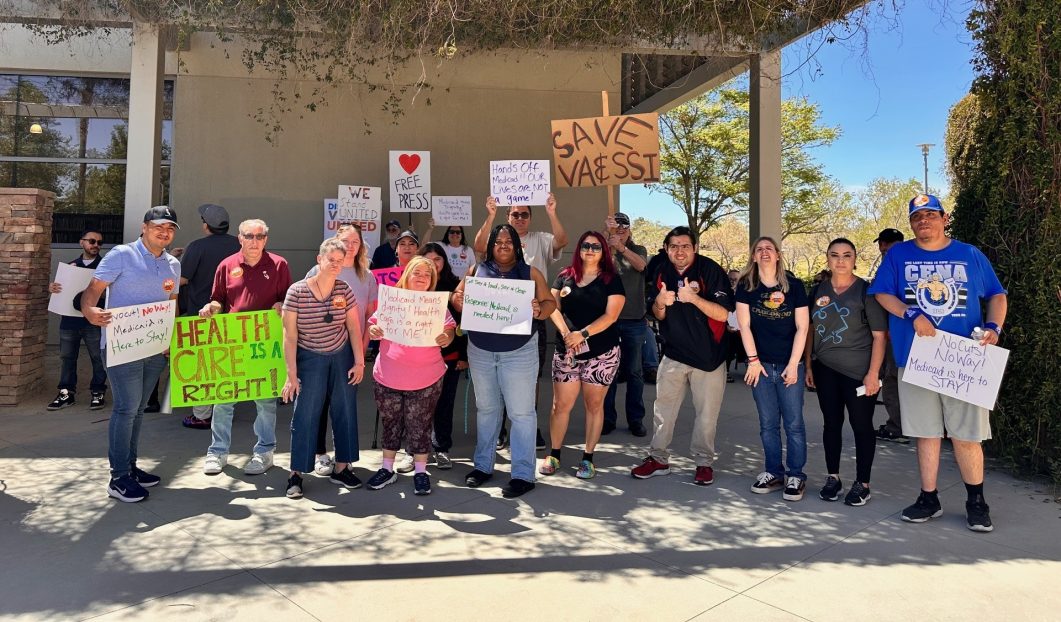
Photo highlights: Inland Regional Center at the Palm Desert and Hesperia rallies during Disability Week of Action, organized by ARCA and DVU!
Sources:
- Inland Regional Center internal data, 2024
- California Department of Developmental Services
- Centers for Medicare & Medicaid Services (CMS), 2023 Medicaid Statistics
- The Lanterman Developmental Disabilities Services Act
Author: Monica G. Munguia, M.A.
Posted by:

Related Posts


Share this Post